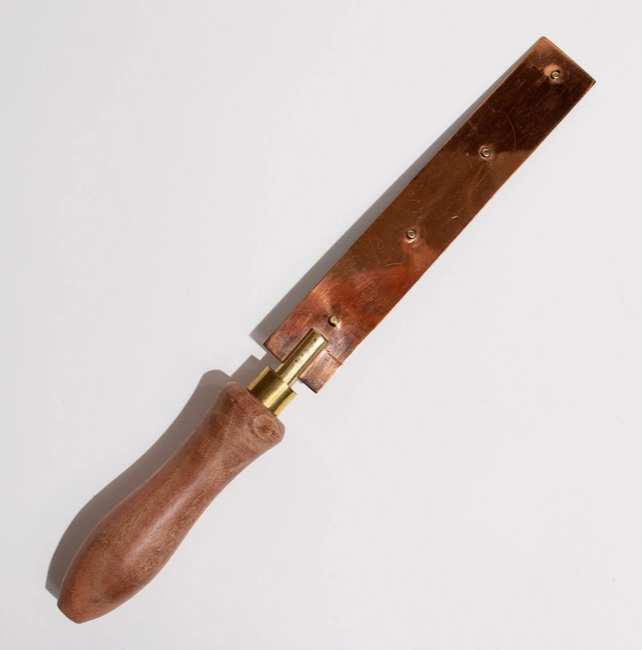

The Bimetallic (Compound) Bar is a demonstration tool illustrating thermal expansion and contraction principles!
A compound bar is a device that demonstrates the principle of thermal expansion and contraction, a fundamental concept in thermodynamics. This device was invented by the English clockmaker, John Harrison, as part of his marine chronometer, a navigation device that allowed sailors to determine longitude at sea. The bar consists of two bonded metal plates, one of pure copper and the other of aluminum. When at the same temperature, they remain straight due to the equal expansion or contraction of both metals. However, when heated, the two metals expand at different rates due to their distinct coefficients of thermal expansion, causing them both to bend. On a microscopic level, as the metals are heated, the kinetic energy of the molecules increases. This results in the molecules vibrating more rapidly and occupying more space. Both plates grow, but since aluminum expands roughly 35% more than copper bar, the two metals expand and contract at different rates when subjected to the same temperature shift. The bar always bends away from the aluminum side and toward the copper side. The demonstration can be inverted by cooling the bar, causing the molecules to lose kinetic energy and and the metals to contract. As they contract at different rates, they bend slightly in the direction of the copper and the bar once again becomes straight, thereby providing a tangible illustration of thermal contraction.